Insights

Notes on advertising, measurement and AI.

Articles on the work behind online advertising, written for the businesses that plan it.

AllGoogle AdsMeta AdsTracking and analyticsAI solutionsStrategy
A media-plan board with channel lanes, budget bars and a funnel

Featured · Strategy

Plan the measurement before the first campaign

Most advertising problems begin before any campaign goes live. When the goal is vague, the tracking is an afterthought, and the budget is set by habit, it becomes hard to say later what worked.

We start by agreeing one clear goal for each channel, such as enquiries or sales. We then set up the tracking that measures it, and only after that do we plan the audiences, the keywords and the creative.
More articles

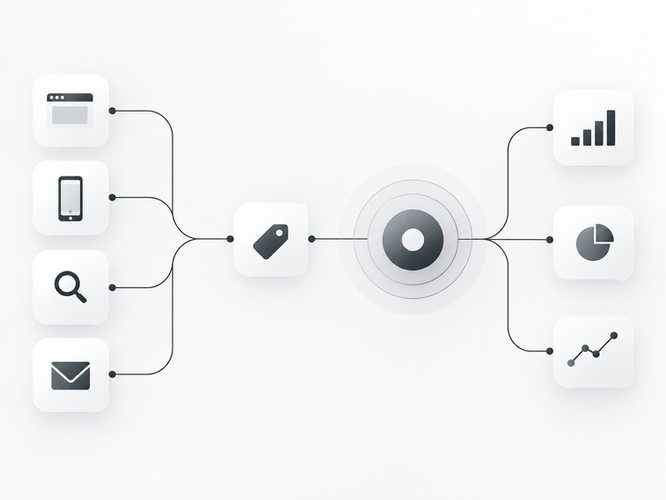
A tracking diagram of abstract flow nodes

Tracking and analytics

Reading a conversion report without guessing

Read the article

A conversion report is only useful when each number has a clear definition. Before reading one, check what counts as a conversion, over which period it is measured and whether it includes the enquiries that arrive by phone or email.

Compare the report with the goal you agreed at the start, not with last month's figures alone. Small changes in volume are often seasonal, while a change in the cost of each enquiry usually points to a change in targeting or creative.

An abstract monochrome grid of data points

AI solutions

Where AI helps advertising teams, and where it does not

Read the article

AI is useful for sorting large volumes of search terms, summarising results and drafting variations of a message for testing. It is less useful when the goal is unclear, because it will optimise toward whatever the data rewards.

The campaign team should keep the decisions and the reasons for them. AI supports that work, and the reporting should show how each decision was reached.

A horizontal progress visual with four stepped nodes

Strategy

Why a campaign plan should be reviewed, not just launched

Read the article

A launch is the start of learning, not the end of the plan. Schedule a review after the first period of data, when the tracking has settled and the early results show which audiences and messages need more attention.

Each review should end with one or two changes and a clear reason for each, so the next round of results can be read against them.

Have a question about your campaigns?

Send us a message through the contact page and we will reply.

Contact us
Built with Symphony.co